

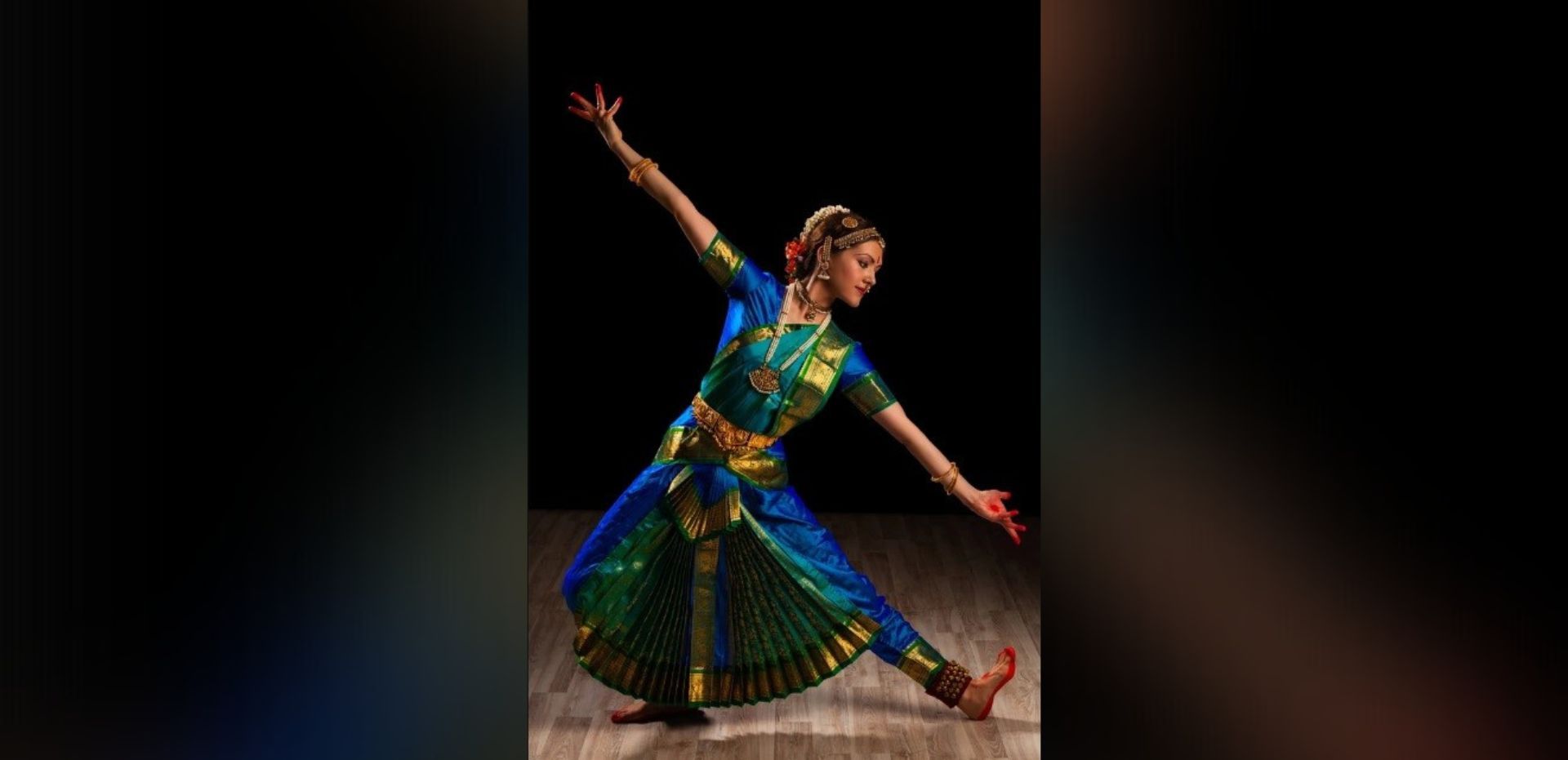
Bharatanatyam: The Renaissance
By the mid-20th century, Bharatanatyam had emerged from disrepute and moved from temple to stage. This classical dance form had gained some acceptance, but giving it the credibility and respect it still needed were three leading proponents. In the concluding part of this series, we look at how three powerful women led the Bharatanatyam renaissance and helped it flourish as a performing art.
Each had their roles and responsibility to/ towards , the flow of the momentum of Dance and Dance music.
The mid-20th century had witnessed the resurrection of Bharatanatyam, safely extricated from its obscure, denigrated origins, by the efforts of the great visionary E Krishna Iyer, fondly called ‘EK’. Now it was time to propel the dance onto the national, secular stage.
This journey was to be made under the able guidance of some of the greatest exponents of the art. One among them, spearheading the initiative, was Rukmini Devi Arundale (1904 --1986). Her tryst with dance began the day she attended a dance recital organized by ‘EK’ at the Music Academy in Madras, in 1935.
Featuring two Dasis, Varalakshmi and Bhanumathi, disciples of the dance teacher Pandanallur Meenakshi Sundaram Pillai, the dance transported her into another realm. Inspired by its beauty, she decided to learn dance from the same teacher. Initially reluctant to accept Rukmini Devi as a disciple, M Sundaram Pillaiwas persuaded to do so by E Krishna Iyer. Thus at the age of 30, Rukmini Devi began her sojourn into a new world of dance and music.
Rukmini Devi was already a well-known personality with contacts and influence, and connected to the famous Theosophical Society. As a high-caste Brahmin woman, she could lead the movement of dance from the front, to bring in the desired respectability.
Rukmini Devi too echoed the sentiments of EK, that the life of the Dasis as well as of the community needed to change for the better. It was men and social restrictions that were responsible for the present situation. In her passion, she was encouraged and supported by her husband George Arundale, who had become President of the Theosophical Society.
So in pursuit of bringing dance to centre-stage, she decided to showcase her new-found talent at the Diamond Jubilee Celebrations of the Theosophical Society in 1935, much to the discomfort of her dance teacher, who believed it was too early in her training for a public performance. Undeterred, Rukmini Devi danced and there was no looking back.
Rukmini Arundale: Reinterpreting The Traditional
Soon thereafter, she established the Kalakshetra institution in 1936. Based on the gurukul system, students and teachers lived in the same campus, in sprawling sylvan surroundings at Adyar, Chennai. In the years to come, students from all over the world will enroll here.

Rukmini Devi’s role in the resurrection of Bharatanatyam is monumental, as she picked up pieces of an existing tradition and pushed it into the wider public domain. Along with a stamp of contemporary reinterpretation, dance dramas were popularised. To ensure continuity and perfection, she invited Dasis like Gowri Ammal, and Meenakshi Sundaram Pillai, to reside and teach at Kalakshetra.
Popularising the name of the dance as Bharatanatyam, she rendered innovations in its performance, rearranging the ensemble to be stationed on one side of the stage so that the dancer had freedom to move. Dance costumes were modified into colour coordinates. The stage was lit and had a new background of Nataraja, the Dancing Shiva, for the first time.
All remnants of the vulgar or sensual were removed from expressions, gestures and song lyrics. The focus was on pure bhakti or devotion; was far removed from the amorous concept of love hitherto portrayed in earlier Dasi Attam.

In the years to come, acceptance for the Dance grew, through her institution and Dance classes, concerts, lectures, dance demonstrations, exhibitions and publications. Publicity and documentation helped the tradition to reach the educated class and made it accessible to all.
The great tradition set by Rukmini Devi has carried on since. Even today, Kalakshetra continues to showcase the legacy of dance through public performances, its vast library resources, and dance classes.
Balasaraswati: Divinity In Dance
Parallel to the relentless efforts of great stalwarts like ‘EK’ and Rukmini Devi, there were other luminaries who appeared on the scene, among them two names that stood out in distinction. They were Balasaraswati, seventh in line to the famed Tanjore Quartet, and Kamala Narayan, with her foray into cinema, and they would elevate the art to yet another level.

Balasaraswati (1918 – 1984) had an illustrious lineage. Her ancestors, Pappamal and Veena Dhanammal, had been famous dancers and musicians in the Court of Tanjore in the mid-18th century. Amidst the prevailing situation, with dancers reduced to a state of prostitution, her family wished to discontinue the family tradition and initially discouraged her interest in dance.
ButBalasaraswati was to decide otherwise. She believed that there was nothing in Bharatanatyam that needed to be purified afresh—it was divine and innately so. Love and shringara, or erotic love, as shown in Bharatanatyam, was never carnal. It conveyed the presence of the inner as well as outer self, not just of the physical body of the dancer.
A brilliant dancer from a young age, she preserved the purity of the tradition of the Tanjore Quartet. Those watching her dance could experience its inner divinity, as she could convey the complete presence of the soul.
Balasaraswati had been training in dance from the age of three under the famed Nattuvanar, Kandappa Pillai, who belonged to the traditional teachers of Tanjore. Daylong training with strict and rigorous discipline was adhered to. For instance, to get her head movements right, sandbags were placed on her head!
A consummate exponent of music in dance, a legacy, which she had inherited from her grandmother and her mother Jayammal; she stunned the audience with her skilled portrayal of the shringara or erotic love at her arangetram, her debut performance at the age of seven! Her mother, a dedicated musician herself, had taught her to emote with music and not words.
By the time she was 16, she was dancing in North India, one of the first dancers to bridge the cultural divide between the North and the South. As she performed in Calcutta at the invitation of the famous dance exponent and choreographer Uday Shankar, she crafted her dance to the tune of Ja Na Ga Ma Na, well before it came to be India’s official national anthem. Among the audience were great luminaries, the likes of Nobel Laureate Rabindranath Tagore. She later followed up with dances at Santiniketan and Varanasitoo.
Balasaraswati’s career in dance thereafter continued in Chennai, where she also conducted dance classes at the Music Academy through the 1930s, with a mission to attune young minds to the purity of the dance.
Criticism & Contempt
The journey was tough. She and her family had to face severe criticism and contempt from conservative circles. So by the age of 29, even as she became famous at the national level as a member of the Dasicommunity, she was the target of gossip. This was not the end of her troubles. Balasaraswati was to suffer a phase of invisibility in the 1940s. From 1945 to 1949, very few invitations to dance came her way. The thought that society had almost rejected her, rankled. But her deep spirituality gave her strength, and she continued learning her art. It was during that turbulent phase that her only child, Lakshmi, was born.
The ’50s and the ’60s, however, turned the tide. Balasaraswati became a tremendous success as she returned to dance on the national and global stage, especially in the United States. Society was finally moving towards integration. Despite all her health problems, she danced, and Lakshmi managed her programs and finances.

Music, dance and dance music remained spiritually immersive experiences for Balasaraswati, taking her audience to a sublime level of happiness. Her rendition, "Krishna nee begane no" was her own timeless contribution to the movement of dance from the temple to stage.
Her legacy is being carried forth by her grandson Anirudha Knight, a dancer himself. Her work continues through his foundation, the Balasaraswati Scripps Foundation based in Chennai.
Kamala Narayan
The next landmark in the evolution of Bharatanatyam was its foray into the world of Tamil Cinema, which opened a new platform for its revival in the 1930s. Carnatic musicians were now rendering compositions for movies.

However, the stigma attached to Bharatanatyam remained, even with the Devadasi Dedication Abolition Act of 1947. The credit of rendering the dance as a respectable art form goes to an artiste like Kamala Narayan.
Born in 1934, into a highly cultured and educated Brahmin family, Kamala began her foray into dance at the age of fivewith Kathak, a classical dance form popular in North India. During one of her stage shows in Bombay, Tamil film director A N Kalyanasundaram Iyer discovered her. Thus began her career in films with minor dancing roles, at first. By the late 1930s, she was known as ‘Baby Kamala’. Her dancing was noticed by other filmmakers and she moved to Hindi films, where she was presented as Kumari Kamala.
During World War II, her family relocated to Madras and Kamala began learning Bharatanatyam under the aged hereditary Nattuvanar, K Muttukumara Pillai. Later, under Nattuvanar Vazhuvoor Ramiah Pillai, Kamalabegan her training in the traditional Vazhuvoor style of Bharatanatyam. As a young prodigy in the 1940s, she trained both in dance and vocal music. Her dance teachers imparted strong basic techniques of movement.
A brilliant collaboration with Vazhuvoor Ramaiah Pillai led to the creation of short musical pieces for Tamil cinema and dance dramas with elegant dance poses. The structure of her dance ushered in a style that presented the vibration of joy and poetry in motion.” Jumping like a gazelle, with her limbs moving in beautiful grace, sculpture came alive in her poses, which she could hold for half a minute with superb ease.”
Film exposure also supported her stage performances to create awareness about Bharatanatyam in society. The combination was unique as her stage performances were traditional Vazhuvoor style of Bharatanatyam, unlike her film dances in Tamil cinema. The simultaneous exposure on the stage and in films helped capture the imagination of the discriminating middle class.
Kamala rendered on average 200 stage recitals annually, besides several films like Aduvome and Vetri Ettu Dhikku among others. HerTamil film Naam Iruvar made a permanent impact. Replete with patriotism and Gandhian songs, its dances sparked a ‘cultural revolution’, legitimising Bharatanatyam and winning it acclaim.
With Kamala at the helm and the power of Cinema, the transformation of dance from temple to stage reached its break-even point. From where, the stigma of contempt and scorn eased off, in the minds and hearts of the public.

Thus Bharatanatyam finally began its new ground of acceptance. And widened in the new expansion, as mothers hoped daughters would dance like Kumari Kamala. Many sent their daughters to Vazhuvoor Ramaiah Pillai’s school. Dance schools mushroomed everywhere. Young dancers wished for costumes similar to Kamala’s; tailors had to make numerous costumes of the same pattern!
Today, more than seven decades later, the legend lives on. At present, Kamala Narayan, at the age of 86, continues to be active and teaches dance at her school Shri Bharatha Kamalalaya in Long Island, USA.
Conclusion
The story of Bharatanatyam is symbolic of more than just the revival of an Art form. There are many lessons to be learnt here. It proves beyond doubt that Art cannot be confined to restricted boundaries .It knows how to turn graceful flow into different streams.
The trajectory of this transition from temple to stage holds up a mirror to society – the contradictions of a collective consciousness that identifies with social evils vis-a-vis a consciousness that recognizes the magnificent beauty, grit and optimism of Art of Dance . The hypocrisies of human nature are evident, as with upper caste men who once exploited the Dasis within temple premises, , did a complete somersault when women from their families began to learn and dance on the stage. Another remarkable phenomenon is the role of women helping women to free themselves from the shackles of disrepute.
The Art of Dance and Dance music are indebted to many hands that shaped the flow – dancer, teacher, musician, king, temple and common man, all symbolising the moving push and pull of the rhythmic wave that helped Dance find a higher ground.
The Renaissance of Dance of Bharatanatyam , in its journey from obscurity to an universally acclaimed Art form, owes tribute to many a great patron,:to the trio – Rukmuni Devi Arundale, Balasaraswati and Kamala Narayan. Their contribution was tremendous, providing the right momentum in the chain of events that led to the recognition of the art.
As Indian immigrants and dancers settled in UK and US and elsewhere in the world through marriage and dance outreach programs, Hindu temples, as In India, were built around worship and ceremonies from 1970's and 80's onwards. There are about 900 temples in the US and 187 in England. Promoting the programs of religious worship and cultural activities as all of Dance and Music of India
Supporting the truism which Ancient India was aware that Temples can and does hold the religion and Arts of Hinduism, in unison of peace and harmony.
Today Bharatanatyam has blazed into worldwide recognition. It has become a status symbol to learn the dance, as no other dance has witnessed such widespread recognition and outreach to a national and international stage.
The Art of Dance of Bharatanatyam and its accompanying music has finally received its much-deserved honour and dignity.
Epilogue
The fate of the Devadasis is yet another story. Unfortunately, the system continues to prevail despite the ban. The National Council of Women claims there are still about 48,000 Dasisin India. Many of them belong to the scheduled caste and lower castes. According to the National Human Rights Commission, the figure was as high as 4,50,000 in 2013. Another commission led by Justice Raghunath Rao revealed that there are about 80,000 Devadasiwomen in Andhra Pradesh and Telangana alone. Not many are aware of the ban, or choose to ignore it.
D. Muthulaxmi ReddyIn Later Years
Finally understood and acknowledged the contribution and efforts of EV Krishna Iyer, with whom she was locked in the verbal battle in the early 1930’s.
Dr Muthulaxmi Reddy continued her work for the welfare of Devadasis. In 1931, she opened the Avvai Home in Chennai, as an orphanage and rehabilitation centre, and it soon became a school. By the 1950s, it was offering courses in nursing, teacher training, carpentry, handicrafts and home science, to equip girls for jobs even while they pursued dance and music. Women from poorer sections, including many from the Devadasi community, graduated from the institute and thrived in the anonymity granted by the bill.
Another initiative by Dr Reddy has been in the area of women's health. Cancer being a common issue in the Dasi lineage, she decided to specialise in cancer treatment, especially after losing her younger sister to cancer. Thus began theAdyar Cancer Institutethat is today a world-renowned institution for the treatment of cancer.
If you enjoyed this article, you will love LHI Circle - your Digital Gateway to the Best of India's history and heritage. You can enjoy our virtual tours to the must-see sites across India, meet leading historians and best-selling authors, and enjoy tours of the top museums across the world. Join LHI Circle here

Your source for unique home decor and furnishings that blend modern design with traditional Indian craftsmanship. Responsibly sourced from over 11,000 artisans, our products reflect authenticity, sustainability, and fine craftsmanship. Discover the beauty of India with Peepul Tree.


