

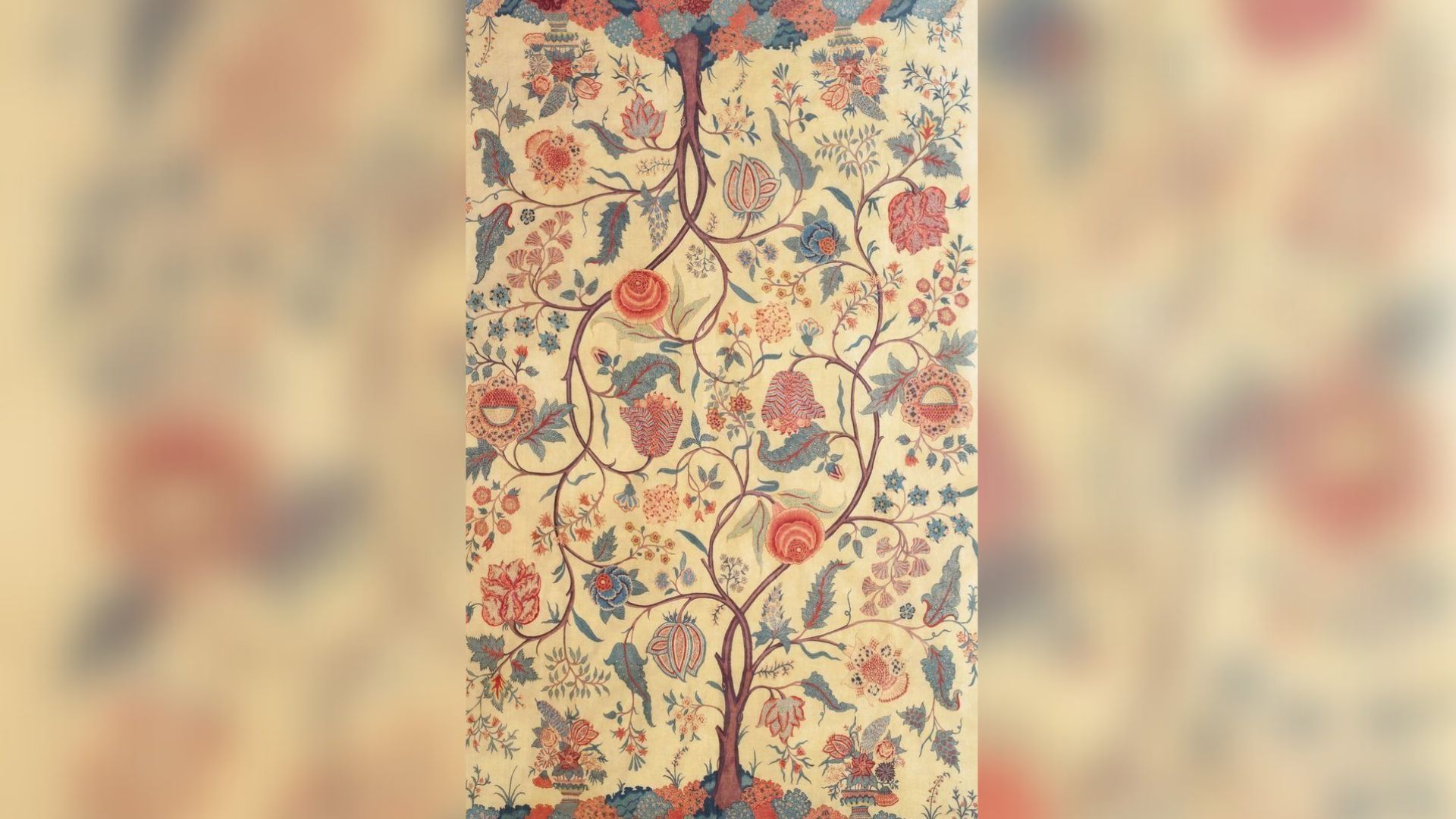
Blooming Patterns - The Floral Motifs of Chintz Through History
For centuries, Indian chintz dazzled the world with its vibrant floral designs. Each motif carried its own story — a blend of cultural influences, artistic innovation, and timeless beauty. From royal Mughal gardens to European parlours, these floral patterns transcended borders and captivated hearts.

The Tree of Life — An Ancient Symbol
An enduring symbol found across cultures, the Tree of Life flourished in Indian chintz as a motif of longevity, wisdom, and connection. Often depicted with bold red flowers, this design captivated British buyers, who cherished its sense of prosperity and eternity.
In chintz, the Tree of Life motif reflected both Indian spiritual beliefs and European tastes — a true symbol of cross-cultural exchange.

The Mughal Bloom — Inspired by Persian Gardens
During the Mughal period, floral motifs blossomed with intricate detail. Inspired by Persian gardens, these designs wove delicate vines, blossoms, and geometric patterns into chintz textiles.
This rich artistry mirrored the Mughal emperors’ deep love for gardens — from Babur’s fondness for flowers to Jahangir’s admiration of nature’s beauty.

The Robust Indian Style — Bold and Beautiful
Closer to home, Indian artisans developed a distinct ‘robust’ style of chintz. Thick tree branches, delicate twigs, and clusters of blooms adorned the fabric.
This earthy and bold style celebrated India’s rich biodiversity and reflected the influence of Islamic and local traditions.

The Delicate European Bloom — Soft and Subtle
When chintz gained popularity in Europe, Indian artisans adapted their designs. Patterns grew smaller, more scattered, and less structured — a delicate aesthetic tailored to European tastes.
These refined designs transformed chintz into an essential part of 18th-century European fashion and décor.

A Fusion of Styles — Where East Meets West
By the 18th century, Indian artisans had masterfully combined their bold, Indian florals with softer, European-inspired patterns. This fusion of styles created light, airy designs that enchanted consumers worldwide.
Blending heritage with innovation, these mixed motifs became the hallmark of chintz’s lasting legacy.
From rich red roses to twisting vines, from exotic birds to paisley patterns, floral motifs turned chintz into a timeless canvas of cultural exchange. Each flower whispers a story — of trade routes, artistic brilliance, and generations of skilled artisans who made cotton bloom with beauty.
Check out the new Chintz collection from Peepul Tree here

Your source for unique home decor and furnishings that blend modern design with traditional Indian craftsmanship. Responsibly sourced from over 11,000 artisans, our products reflect authenticity, sustainability, and fine craftsmanship. Discover the beauty of India with Peepul Tree.


