

India’s Lost Cupid
When we think of Cupid, the cherubic Roman god of love with his bow and arrow, we picture a figure synonymous with romance and desire. But did you know that India has its very own Cupid? Meet Kamadeva, the God of Desire, whose story got lost in time.

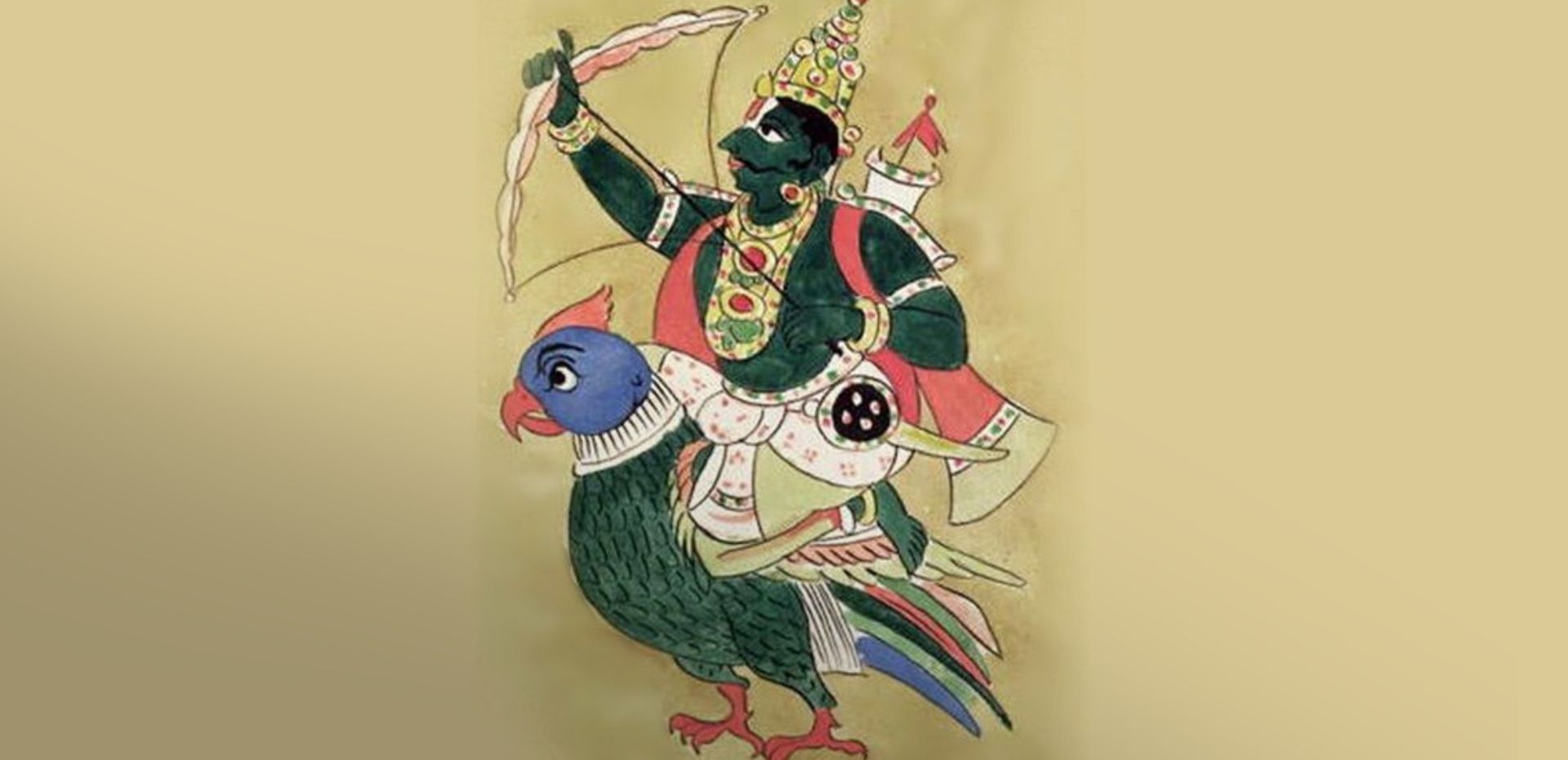
Kamadeva’s tale begins in the ancient texts of the Rigveda, where he is described in vivid detail: a striking figure riding a parrot, carrying a sugarcane bow strung with humming bees, and armed with flower-tipped arrows. His arrows, symbolic of desire, could make anyone fall in love. His imagery, much like the Greek Eros or the Roman Cupid, captures the allure and intrigue of love itself.
But Kamadeva’s most daring tale lies in his confrontation with Lord Shiva, an act that would shape his destiny and redefine his place in mythology.

The Tale of Kamadeva and Shiva: Love’s Great Sacrifice
Kamadeva’s most famous story centers on his bold encounter with Lord Shiva. The god of desire was tasked with a divine mission: to awaken love in Shiva’s heart for Parvati, the daughter of the mountain king. Parvati, deeply devoted to Shiva, sought to win his affection, but the meditating deity was unyielding.
Determined to fulfill his role, Kamadeva aimed his flower-tipped arrows at Shiva. What followed was catastrophic. Shiva, furious at being disturbed, opened his third eye and reduced Kamadeva to ashes. This moment of divine rage not only ended Kamadeva’s physical form but also cemented his place in mythology as a symbol of sacrifice for love. It was only after Shiva and Parvati’s union that Kamadeva was resurrected—but his presence in the pantheon would never be the same.

Why Did Kamadeva Disappear?
After his resurrection, Kamadeva’s prominence in Indian mythology gradually faded. One reason for this could be his incorporation into the Vaishnavite tradition, where he was identified as a son of Vishnu and Lakshmi. But another figure soon eclipsed Kamadeva’s role as the god of love: Krishna.
Krishna, with his legendary love for Radha and the gopis, became the quintessential lover in Indian mythology. His charm, wit, and role as the ultimate romantic naturally overshadowed Kamadeva. Even local festivals dedicated to Kamadeva, like the Madana Leela, were absorbed into Krishna worship, transforming into the Raas Leela. Kamadeva, once central to tales of desire, quietly receded into the background.
Kama: From Myth to Philosophy
As Kamadeva faded from mythology, the concept of desire (kama) took on a broader and more profound meaning within Hindu philosophy. Kama was no longer just about romantic love—it became a paradigm for all forms of longing, from emotional connection to material pursuits.
Catherine Benton, a scholar of Kamadeva, explains that kama in Indian thought represents the spectrum of human desires and cravings. Historian B.G. Gokhale further elaborates that in ancient India, kama encompassed the pursuit of pleasure, often reflected in cultural and material indulgences like fine ornaments, fragrant sandalwood paste, luxurious clothing, and extravagant festivals.
Thus, Kamadeva’s essence was elevated from a mythical figure to a universal principle central to the human experience.
Kamadeva in Art
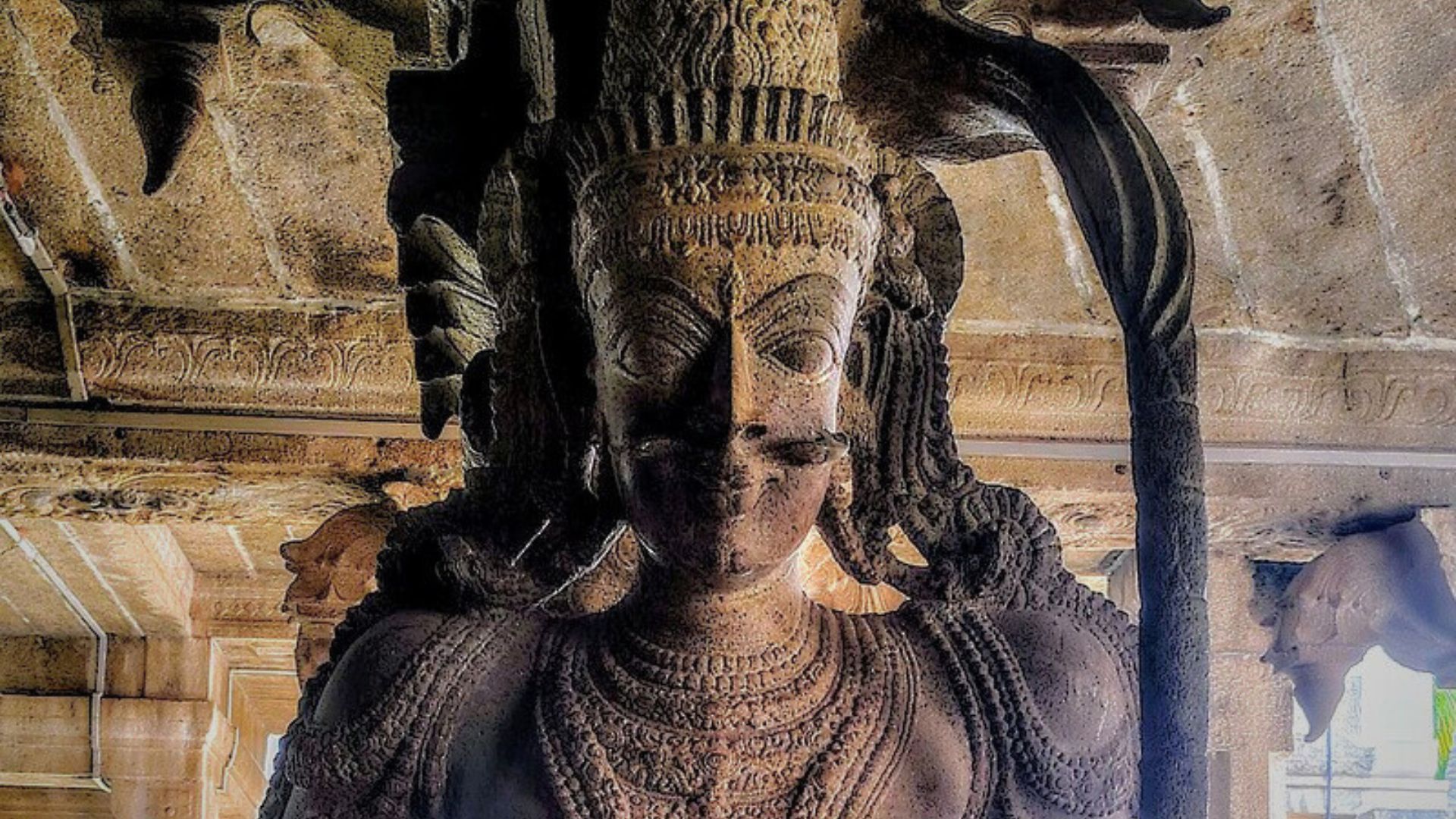
While Kamadeva’s stories faded over time, the few visual depictions that remain are rare treasures. His figure is sculpted on the outer walls of the Bhuvaneshwar temple in Odisha and the Kailash temple at Ellora, serving as reminders of his once-prominent place in Indian art and culture.
One of the most exquisite depictions of Kamadeva and his wife, Rati, can be found at the Salar Jung Museum in Hyderabad. This intricately carved wooden sculpture captures the couple in an elegant embrace, showcasing the artistic brilliance of the time.
Kamadeva’s name may not be as widely recognized today, but his essence is woven into the fabric of India’s culture. Whether through Krishna’s legendary romances or the intellectual exploration of kama, Kamadeva’s spirit endures.

Your source for unique home decor and furnishings that blend modern design with traditional Indian craftsmanship. Responsibly sourced from over 11,000 artisans, our products reflect authenticity, sustainability, and fine craftsmanship. Discover the beauty of India with Peepul Tree.


