

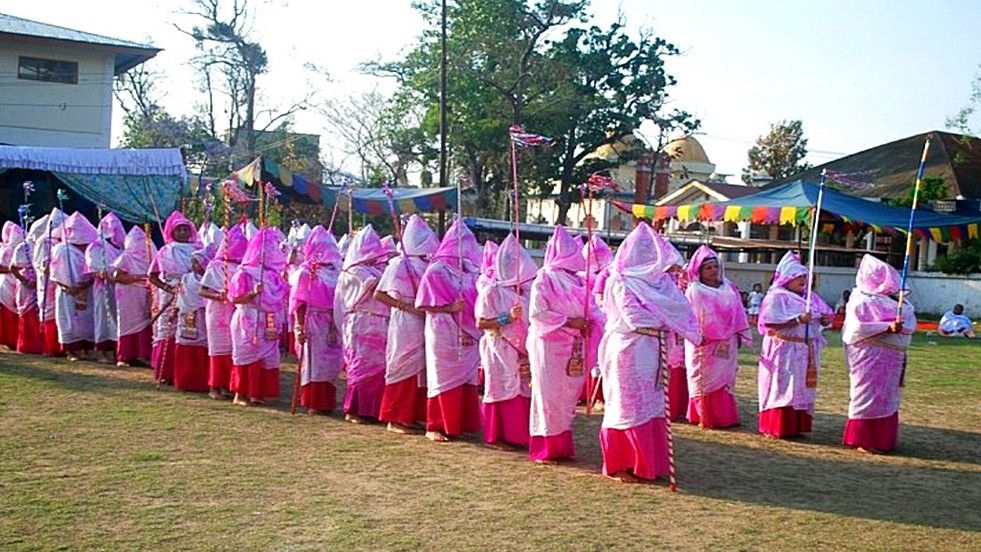
Yaosang - Holi the Manipur Way!
In Manipur, Holi isn’t just a festival — it’s a six-day spectacle of dance, music, and sports that blends ancient traditions with modern energy. Known as Yaosang, this vibrant celebration has thrived for over 300 years by adapting to changing times — a remarkable feat that has kept it alive and relevant to this day.
The Meitei are the dominant ethnic group in Manipur, occupying the central plains of the state. While mostly concentrated in Manipur, smaller Meitei communities are also found across Assam, Meghalaya, Tripura, Bangladesh, and Myanmar. The origins of Yaosang lie in the ancient traditions of the Meitei people, who originally celebrated it as a harvest festival.
However, Yaosang as we know it today is deeply shaped by the influence of Vaishnavism, which took center stage in Manipur during the reign of King Meidingu Pamheiba (1690–1751) of the Ningthouja dynasty. In the early 18th century, Hindu preachers from Sylhet (present-day Bangladesh) introduced Gaudiya Vaishnavism, a tradition founded by the 15th-century Bhakti saint Chaitanya Mahaprabhu. King Pamheiba converted to Hinduism and declared it the official religion of Manipur, and with this shift, Yaosang transformed into a festival dedicated to Krishna. While its Vaishnavite influences became dominant, the festival still retained elements of its earlier, agrarian roots — a reflection of how traditions can evolve without losing their essence.
Ancient Roots and Evolving Traditions
The very name ‘Yaosang’ points to its agrarian origins. In Manipuri, ‘Yao’ refers to sheep, and ‘Sang’ means shed — a reminder that the festival once marked the end of winter and the start of spring, much like ancient spring festivals across the world. Celebrated around the full moon day or ‘Lamda’ in March, Yaosang continues to retain symbolic practices that connect it to the changing seasons.

One of the most fascinating customs during Yaosang is the Thabal Chongba, or ‘dancing in the moonlight.’ In earlier times, conservative Meitei families rarely allowed young girls to interact with boys. Thabal Chongba became a socially acceptable space where young men and women could meet — much like the Garba in Gujarat. Participants dance in circles to the rhythmic beat of drums, accompanied by lively folk music — a tradition that still draws large crowds today.
The Influence of Vaishnavism
The arrival of Vaishnavism introduced new rituals to Yaosang, blending spiritual practices with the festival’s older customs. During the festival, worshippers construct a thatched hut called the ‘Yaosang’. Inside this hut, they place an image of Chaitanya Mahaprabhu, the founder of Gaudiya Vaishnavism, and offer prayers and hymns.
At dusk, after the rituals are complete, the image is removed, and the hut is set on fire — a symbolic act representing the cleansing of past misfortunes and the beginning of new blessings. The burnt embers are considered auspicious and often taken home as tokens of good fortune.

From Rituals to Recreation
While Yaosang’s spiritual significance remains, the festival has evolved into a major sporting event — a unique characteristic that sets it apart from Holi celebrations elsewhere in India. For Manipur’s youth, Yaosang is less about rituals and more about sports competitions that take place across the state.
The festival opens with local clubs visiting the sacred Kangla Fort in Imphal, where they light a torch to inaugurate the sports events. Over the next six days, matches in football, cricket, and other games are held in almost every town and valley in Manipur. The sporting celebration ends with a half-marathon — a tradition that draws both local participants and national athletes.
This shift toward sports has turned Yaosang into something more than just a festival — it's a social movement that unites communities and gives young people a chance to excel.
A Festival That Endures
Yaosang’s remarkable ability to adapt is key to its lasting popularity. What began as a humble harvest festival evolved into a deeply spiritual celebration, and today thrives as a vibrant mix of tradition, social bonding, and sports. Its evolution shows that traditions don’t just survive by resisting change — they thrive by embracing it.
Cover Image Courtesy: e-pao.net

Your source for unique home decor and furnishings that blend modern design with traditional Indian craftsmanship. Responsibly sourced from over 11,000 artisans, our products reflect authenticity, sustainability, and fine craftsmanship. Discover the beauty of India with Peepul Tree.


